
Lyssna på den här podden kostnadsfritt i appen: Ladda ner gratis i App Store
radio.se
Sleeptimer
Spara kanal
1582 avsnitt
The AI Neocloud Debt Crisis
2026-10-27 | 23 min.Elon Musk recently warned that neoclouds, which are specialized companies that rent out artificial intelligence computing power, face severe financial distress and widespread industry consolidation. He noted that debt markets have largely stopped funding firms whose earnings rely solely on artificial intelligence infrastructure, leaving companies without independent revenue streams vulnerable to failure. While enterprises like his own SpaceX secure massive loans by leveraging diversified operations such as rocket launches and satellite services, smaller cloud providers struggle under heavy debt burdens. Furthermore, industry observers highlight that building physical data centers is plagued by lengthy delays and local opposition, creating a dangerous gap between rapid hardware purchases and operational infrastructure. Consequently, experts suggest that plummeting technology costs and towering capital expenditures could threaten traditional investment models, proving that artificial intelligence demand alone does not guarantee financial returns.AI Spending Boom and Housing Freeze
2026-10-26 | 24 min.Major financial discussions and market trends, primarily highlighting a intense debate over whether artificial intelligence is in a bubble. Industry leaders express sharp disagreements, with figures like Citadel CEO Ken Griffin warning of a speculative market while others, such as Blackstone President Jon Gray, point to surging, parabolic demand for compute infrastructure. Commentators also draw comparisons to historical market events like the dot-com era and Black Monday, analyzing how current valuations and productivity metrics differ from past crashes. Furthermore, the sources examine concurrent struggles in the U.S. housing market, where climbing mortgage rates have driven pending home sales and housing starts to historic lows. Ultimately, financial experts emphasize the importance of selectivity and careful evaluation as businesses navigate these transformative yet volatile economic conditions.Meta AI Spending Terrifies Wall Street
2026-10-26 | 21 min.The stock market experienced a sharp downturn, led by a significant tech rout that pushed the Nasdaq to its worst performance since June. Major technology companies like Meta and Tesla saw their share prices drop despite positive earnings reports, primarily driven by investor anxieties surrounding the massive financial costs and infrastructure spending required for artificial intelligence. This widespread selling in the tech sector triggered a notable sector rotation, with investors shifting capital toward defensive areas like consumer staples while semiconductor stocks suffered steep declines. In response to the growing economic uncertainty, the bond market rallied strongly as investors sought safety, pushing Treasury yields lower and restoring the traditional inverse relationship between bonds and stocks. Ultimately, market participants are reassessing the economic realities and long-term profitability of the ongoing AI investment cycle rather than doubting the technology itself.SpaceX Targets 80,000 Cell Towers
2026-10-24 | 20 min.SpaceX is actively negotiating to utilize over 80,000 cellular sites across the United States in its strategic push to become the nation's fourth major wireless carrier. This ambitious initiative combines its established Starlink satellite network and recent spectrum acquisitions with vital terrestrial infrastructure to expand mobile connectivity. While traditional telecom giants like AT&T, Verizon, and T-Mobile face potential stock pressure and pricing disruptions, infrastructure landlords such as Crown Castle and American Tower have seen their shares surge. Industry analysts debate whether this move signals a direct challenge to incumbent carriers or the emergence of a hybrid network model that seamlessly blends space-based and ground-based technologies. Ultimately, experts emphasize that while securing tower access marks a crucial milestone, significant operational hurdles regarding capital allocation, equipment, and network density still remain before the vision is fully realized.How Canva Beat Google At AI Images
2026-10-23 | 12 min.Canva has officially unveiled Canva Craft, its very first proprietary image generation model designed to strengthen its internal creative ecosystem and decrease dependence on third-party AI technology. Built with a unique two-stage architecture, the system first translates user prompts into structured layout plans before rendering high-resolution graphics across a variety of aspect ratios and fifty-five different languages. Trained heavily on Canva's extensive library of design templates and refined through testing by professional designers, the software emphasizes iterative control and precision. Following its launch, the model achieved remarkable success by debuting at fourth place globally on the DesignArena leaderboard. This impressive performance positions the Canva Research lab directly behind OpenAI, making it the second most advanced AI lab in the world for image generation and outperforming competing models from major tech companies.
Fler podcasts i Teknologi






Trendiga poddar i Teknologi














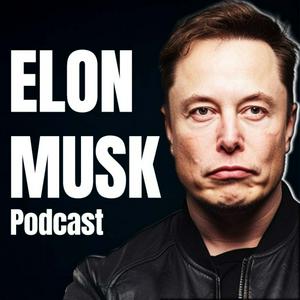
Om Elon Musk Podcast
The Elon Musk Podcast takes an in-depth look into the world of the visionary entrepreneur. From SpaceX's mission to colonize Mars, to the revolutionary underground transportation network of the Boring Company, to the cutting-edge technology of Neuralink, and the game-changing innovations of Tesla, we cover it all. Stay up to date with the latest news, events and highlights from the companies led by Elon Musk.
Podcast-webbplatsLyssna på Elon Musk Podcast, Acquired och många andra poddar från världens alla hörn med radio.se-appen
Hämta den kostnadsfria radio.se-appen
- Bokmärk stationer och podcasts
- Strömma via Wi-Fi eller Bluetooth
- Stödjer Carplay & Android Auto
- Många andra appfunktioner
Hämta den kostnadsfria radio.se-appen
- Bokmärk stationer och podcasts
- Strömma via Wi-Fi eller Bluetooth
- Stödjer Carplay & Android Auto
- Många andra appfunktioner

Elon Musk Podcast
Skanna koden,
ladda ner appen,
börja lyssna.
ladda ner appen,
börja lyssna.
Elon Musk Podcast: Poddsändningar i Familj
 Sverige
